You shipped the landing page in a weekend. The AI laid out the sections, suggested the headline, kept the copy tight. It looked good. It still does. And your conversion rate has not moved since launch.
That is not a design problem. It is a knowledge problem. The tools that built your page were trained on patterns. They were not trained on 128 years of controlled experiments about why people decide to buy, when they abandon, and what a single extra form field costs you in revenue. That research exists. It is specific, it is quantified, and almost none of it is in the training data your build tool used.
The framework your AI defaulted to was described in 1898 by an ad executive writing copy for the National Cash Register Company. He never called it a funnel. He never drew a diagram. He was explaining how to write a print ad. One hundred and twenty-eight years later, every AI code generator on the planet uses a version of his idea to lay out your landing page. The research that followed it includes a Nobel Prize-winning theory about loss aversion, an experiment that proved too many choices destroy conversion, a $60 million A/B test that helped elect a president, and a McKinsey study that proved the entire funnel model is empirically wrong. Researchers proved it wrong in 1976 and kept using it anyway. So does your AI.
128 years
of conversion psychology research. AI code generators trained on none of it. Lewis (1898) to present

We automated building websites. We did not automate understanding why visitors convert. One of those problems is solved. The other takes exactly as long as it always did.
Who Invented the Conversion Funnel?
Not the person you think. And not for the reason you think.
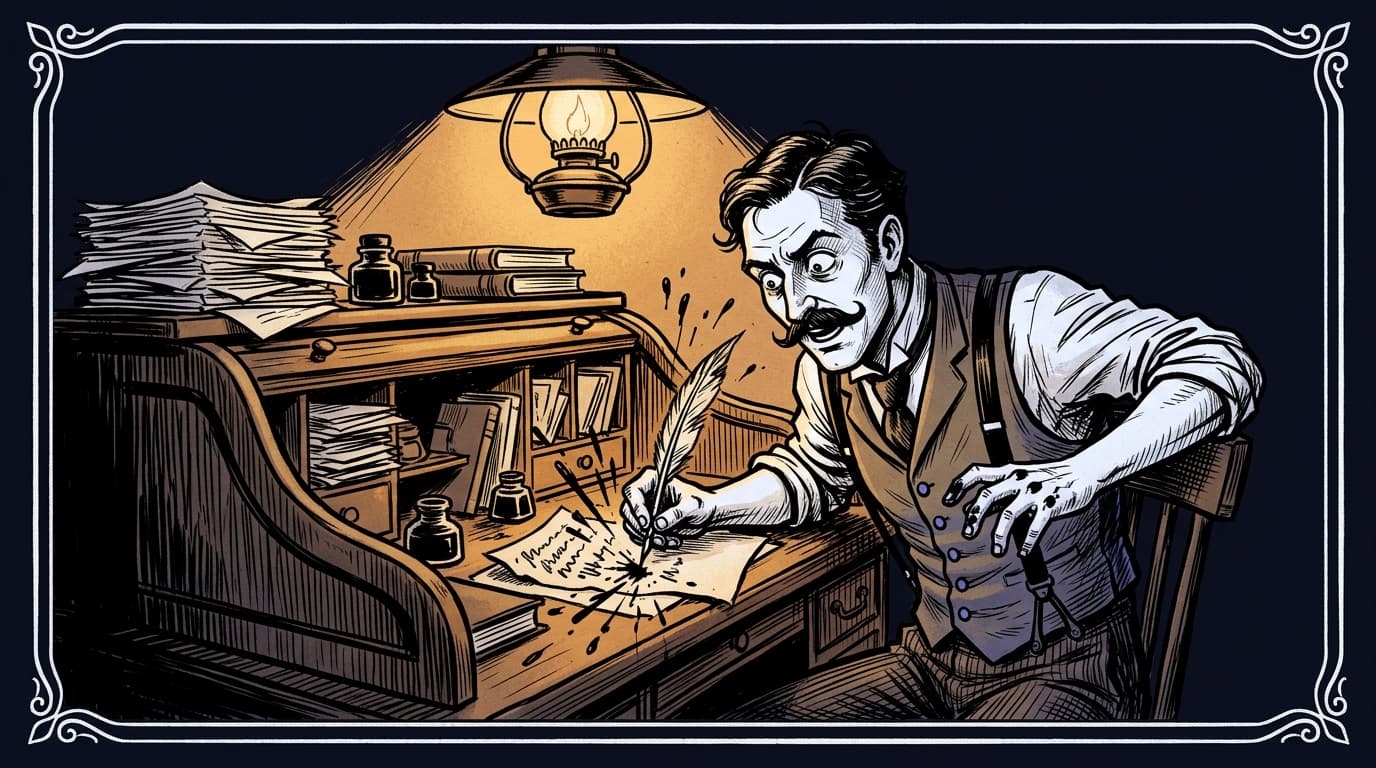
Lewis described what became the AIDA model (Attention, Interest, Desire, Action) across several columns in The Inland Printer between 1898 and 1903. His original version was actually Attention, Interest, Conviction. The "Desire" and "Action" stages came later. He was writing about how to compose a single print advertisement. Not a sales pipeline. Not a multi-touch journey. A print ad.
The funnel shape came 26 years later. In 1924, William W. Townsend published Bond Salesmanship and mapped AIDA to a narrowing diagram where prospects dropped off at each stage. The first visual conversion funnel was drawn by a bond salesman, not a marketer. E.K. Strong gave it academic backing in 1925 with The Psychology of Selling and Advertising at Princeton. By the 1930s, the funnel was a standard sales management tool for forecasting revenue. It was never designed for websites. It was designed for door-to-door salesmen and Wall Street traders.
1898
E. St. Elmo Lewis described AIDA as an ad copy technique. Not a funnel. The Inland Printer
1924
William Townsend first drew the funnel shape. In a book about selling bonds. Bond Salesmanship
When Did We Prove the Funnel Is Wrong?
Fifty years ago. The funnel survived anyway.
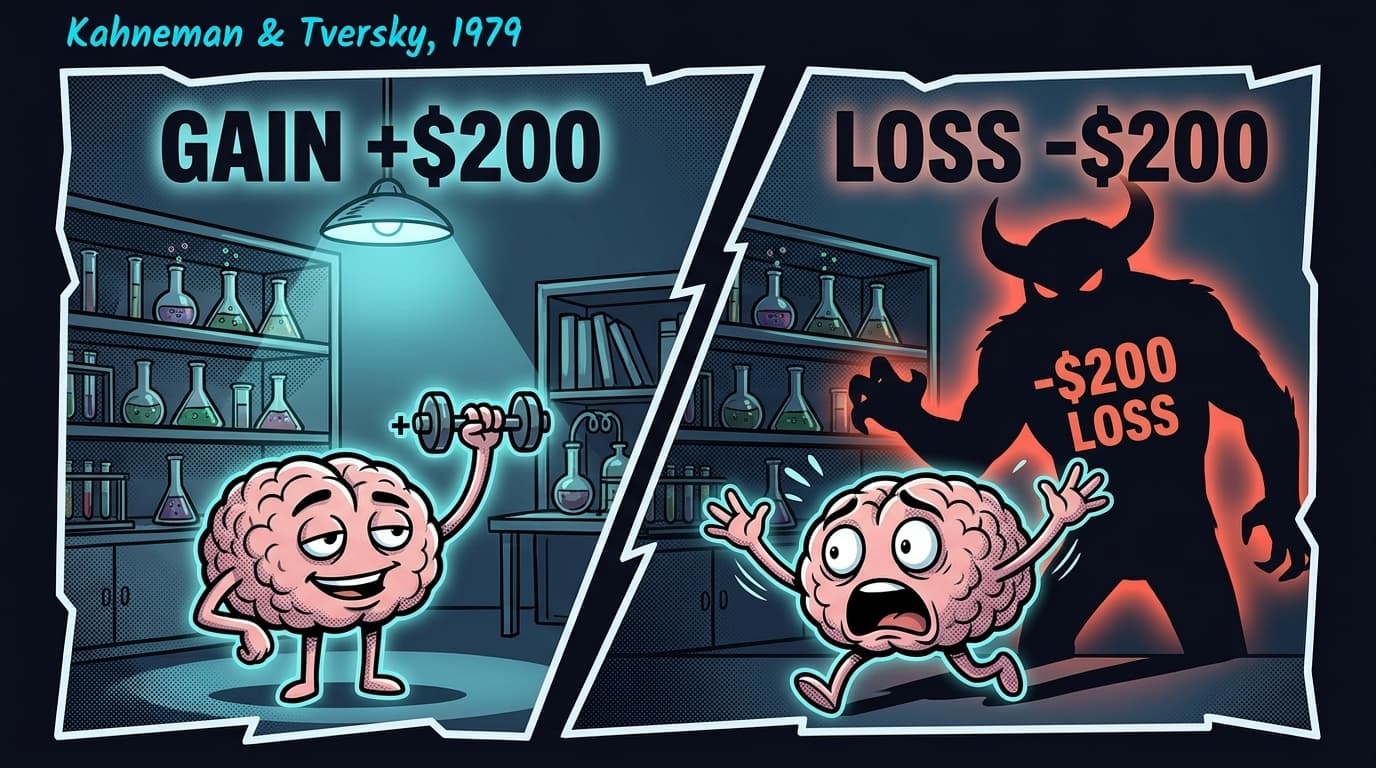
In 1976, Michael Ray proposed three orderings of the hierarchy-of-effects. The standard "think-feel-do" sequence was just one option. He documented a "do-feel-think" sequence for low-involvement purchases: people buy first, then form opinions to justify the purchase. Leon Festinger's cognitive dissonance research from 1957 had already shown that people rationalize decisions after making them, not before. The linear funnel assumed the opposite.
Three years later, Daniel Kahneman and Amos Tversky published Prospect Theory. Their finding that reshaped conversion: people feel losses roughly twice as intensely as equivalent gains. "Stop losing $200/month to manual invoicing" is psychologically more powerful than "save $200/month." This explains why guarantees, free trials, and return policies work at the bottom of the funnel. They reduce perceived loss, not increase perceived gain. In 2009, McKinsey studied 20,000 consumers across five industries and found that options actually increase during evaluation, not decrease. The narrowing funnel was empirically wrong.
1976
Michael Ray proved the linear funnel order is wrong. People sometimes buy first, then rationalize. Communication and the Hierarchy of Effects
2x
People feel losses roughly twice as intensely as equivalent gains. Loss framing converts better. Kahneman & Tversky, Prospect Theory, 1979
128 years of conversion psychology
Lewis describes AIDA for ad copy
Townsend draws the first funnel (bond sales)
Ray proves linear funnel order is wrong
Kahneman: losses hit 2x harder than gains
Jam Study: 6 options outsell 24 by 10:1
Google Analytics democratizes funnels
Fogg: B = Motivation + Ability + Prompt
Vibe coding skips all of it
What Do Jam, Amazon, and Barack Obama Have in Common?
Three conversion breakthroughs. Each came from studying human psychology, not code patterns.
In 1999, Sheena Iyengar set up a jam tasting display at a grocery store. A table with 24 varieties attracted more visitors. A table with 6 varieties sold ten times more jam. The conversion rate: 3% with 24 choices versus 30% with 6. Choice overload became one of the most cited findings in conversion optimization. Fewer options, higher conversion. Most vibe-coded pricing pages do the opposite.
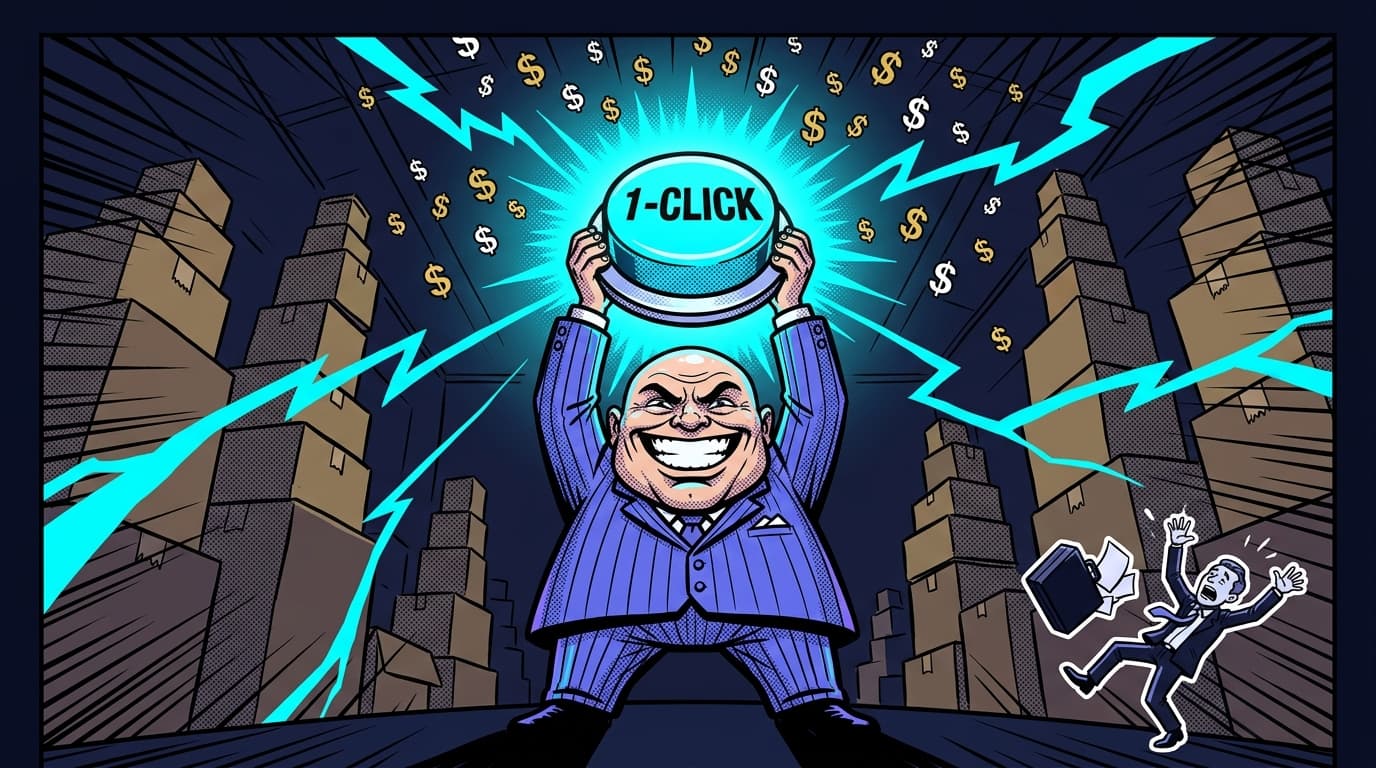
Two years earlier, Amazon filed US Patent 5,960,411: one-click ordering. It eliminated an entire funnel step. The patent was so controversial that the Free Software Foundation organized a boycott and Barnes & Noble was sued for its "Express Lane" feature. One button, billions in incremental revenue. It remains the most impactful conversion optimization in history.
In 2008, Dan Siroker ran what is commonly called an A/B test on the Obama campaign's donation page. It was actually a multivariate test: 24 combinations of 6 media variants and 4 button text variants. The winning combination (a black-and-white family photo with "Learn More" instead of "Sign Up") increased email signups by 40% and was attributed to $60 million in additional donations. The test's success led Siroker to found Optimizely, which brought A/B testing to the masses.
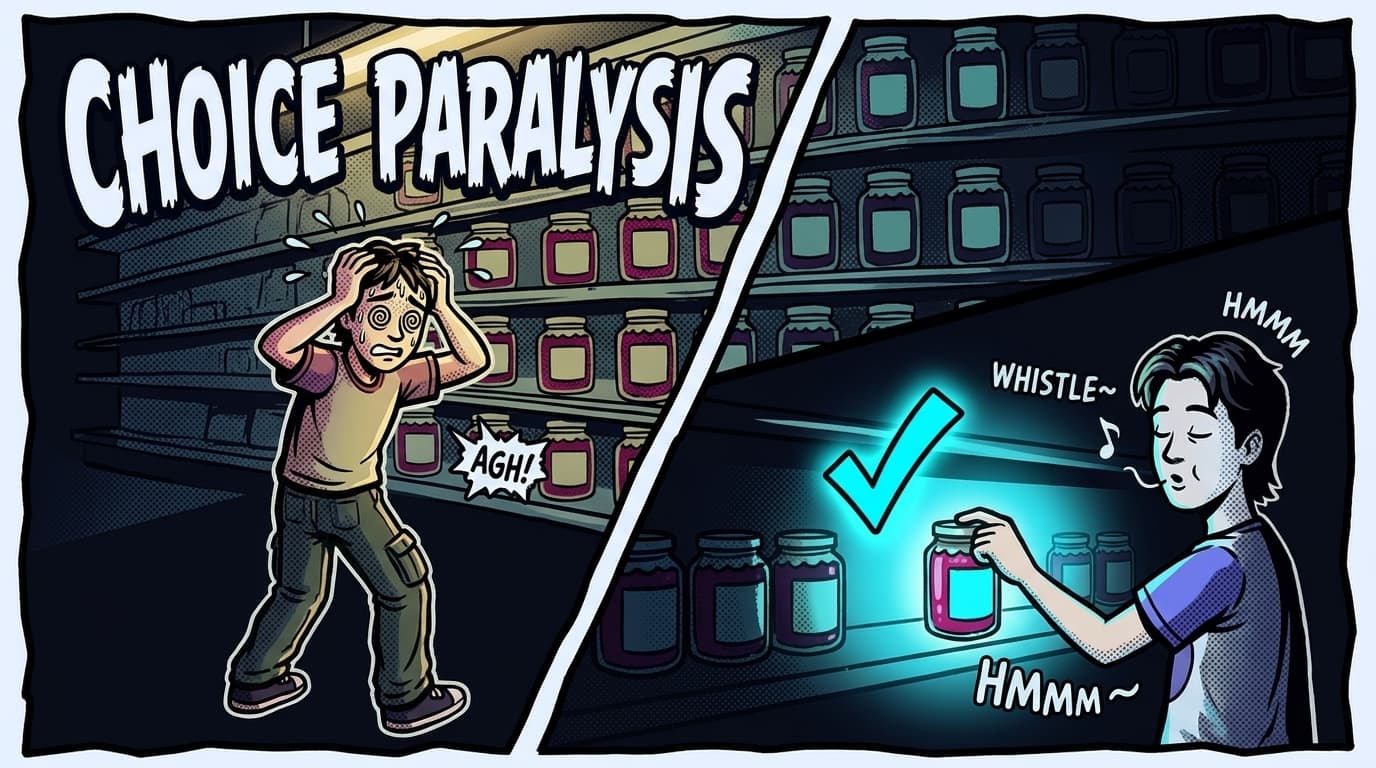
3% vs 30%
Conversion with 24 choices vs. 6. Too many options kill conversion. Iyengar & Lepper, Journal of Personality and Social Psychology, 2000
$60M
Additional donations attributed to multivariate testing during the 2008 Obama campaign. Dan Siroker, Obama campaign optimization team
1-Click
Amazon's 1997 patent. Removed an entire funnel step. Most impactful CRO optimization in history. US Patent 5,960,411
What Does Google Analytics Get Wrong About Funnels?
It democratized funnel analysis. It also taught an entire generation to trust a broken visualization.
In 2005, Google acquired Urchin Software (originally sold at $895/license) and released Google Analytics for free. This was a seismic event. Any website owner could now set up goal funnels, see where visitors dropped off, and measure conversion rates. It created an entire generation of marketers who thought in terms of funnels. The problem: GA's funnel visualization was architecturally broken for years. If a user entered at step 3 (skipping steps 1 and 2), GA backfilled them into the earlier steps. The report showed more people at the top than actually visited those pages. Marketers made optimization decisions based on phantom data.
A better diagnostic framework already existed. In 2012, BJ Fogg at Stanford's Persuasive Technology Lab proposed B=MAP: Behavior requires Motivation, Ability, and a Prompt to converge simultaneously. If motivation is high but ability is low (the checkout form has 14 fields), no conversion. If ability is high but there is no prompt (no clear call-to-action), no conversion. Most vibe-coded pages are missing at least one of these three elements. The model is 14 years old. Most pages still use the funnel layout.
$895
Original price of Urchin. Google made it free, creating an entire generation of funnel thinkers. Google/Urchin acquisition, 2005
B = MAP
Fogg's behavior model. Behavior requires Motivation, Ability, and a Prompt. Most vibe-coded pages are missing at least one. BJ Fogg, Stanford Persuasive Technology Lab, 2012
How Much Code Is AI Writing Right Now?
More than you think. And almost none of it was trained on conversion psychology.
On February 2, 2025, Andrej Karpathy posted a tweet that was viewed 4.5 million times. He described "a new kind of coding I call 'vibe coding', where you fully give in to the vibes, embrace exponentials, and forget that the code even exists." Collins Dictionary later named it a 2025 Word of the Year. The adoption that followed was staggering.
92% of US developers now use AI coding tools daily. 41% of all code globally is AI-generated. 25% of Y Combinator's Winter 2025 batch had codebases that were 95% or more AI-generated. And 63% of vibe coding users are not developers at all. They are founders, marketers, and designers building landing pages, SaaS products, and marketing sites by describing what they want in natural language. The speed is real. The scale is real. The problem is what the AI optimizes for: the most statistically common page, not the most psychologically effective one.
92%
of US developers use AI coding tools daily. GitHub, 2025
41%
of all code globally is now AI-generated. Google I/O, 2025
25%
of YC's W25 batch have 95%+ AI-generated codebases. TechCrunch, March 2025
Does AI Actually Improve Landing Page Conversion?
It depends entirely on who is directing it.
Crazy Egg tested 11 AI landing page analyzers and scored the best one at 5 out of 15 on quality assessment. Most scored 2 to 4. When they A/B tested the highest-scoring tool's recommendations, the result was a 16.4% decrease in conversion rate. The control converted at 34.36%. The AI-recommended variant converted at 28.74%. The analyzers suffered from what the researchers called "context blindness": they could not understand page purpose, audience, or intent. Only one tool even asked about the target audience.
But the same study found something else. When a CRO expert used AI to generate a detailed, conversion-optimized prompt specifying page structure, copy angles, and psychological triggers, the resulting page achieved a 44.83% relative lift compared to the human-designed version. The tool was the same. The knowledge directing it was different. A METR study added another layer: developers estimated they were 20% faster with AI tools while actually working 19% slower. A 40% perception gap. You think the page is done. The conversion layer is missing.
16.4% decrease
Conversion rate change when following AI landing page recommendations without expert guidance. Crazy Egg, 2025
44.83% lift
Conversion improvement when CRO experts guided the same AI tools. Crazy Egg, 2025
19% slower
Actual developer speed with AI tools. They estimated 20% faster. A 40% perception gap. METR, 2025
AI landing page impact on conversion rate
Control: 34.36% → Test: 28.74%
Same tools. Different knowledge directing them.
The tool is not the bottleneck. The conversion knowledge is.
Why Does Every AI Landing Page Look the Same?
Because AI does not learn taste or visual hierarchy. It learns what repeats most often.
Designer Michal Malewicz described vibe-coded output as "functional, but soulless," comparing it to Ikea furniture: "will you remember any of them 30 minutes from now?" His observation: generic messaging like "seamless streamlined effortless automation" tells nobody what you sell. An arXiv paper (2603.13036) formally documented this convergence, finding that AI code generators produce "a globally average aesthetic" regardless of product, industry, or cultural context. The AI generates the most statistically probable page. The average landing page converts at 2.35%.
128 years of conversion psychology says differentiation drives decision-making. Townsend's original 1924 funnel was built on the premise that each stage must give the prospect a reason to advance. When every competitor's page has the same hero layout, the same feature cards, the same generic CTA, visitors cannot tell products apart. The funnel collapses not because of friction, but because of sameness. There is nothing to advance toward.
2.35%
Average landing page conversion rate. The AI reproduces the average. WordStream
arXiv 2603.13036
Academic paper documenting AI design homogenization. Every tool converges on the same layout. 2025
What Would a Funnel-Aware Landing Page Actually Do?
It would apply six principles that took 128 years to establish. Vibe coding applies zero of them by default.
A page informed by the research in this article would use loss framing because Kahneman proved losses hit twice as hard as gains. It would limit choices because Iyengar proved that 6 options outsell 24 by ten to one. It would reduce steps because Amazon proved that removing one click generated billions. It would test assumptions because Obama's campaign proved that intuition about what works is often wrong. It would ensure every section provides Motivation, Ability, and a Prompt because Fogg proved conversion requires all three simultaneously. And it would acknowledge that visitors do not move linearly because McKinsey proved the funnel bends back on itself.
The fix is not "stop vibe coding." The fix is adding a diagnostic step that applies the knowledge the AI was never trained on. Understanding why visitors leave requires testing the page against the psychology that 128 years of research produced. You do not need to read the papers. You need a tool that has already absorbed them.
0
Number of these principles a vibe-coded landing page applies by default. Analysis of default AI landing page output
Frequently Asked Questions
What is the conversion funnel and who invented it?
The conversion funnel traces to E. St. Elmo Lewis, who described the AIDA sequence (Attention, Interest, Desire, Action) in 1898 as a method for writing ad copy. He never called it a funnel. William Townsend first drew the funnel shape in 1924 in a book about selling bonds. E.K. Strong gave it academic backing in 1925. The linear version was shown to be incorrect as early as 1976 by Michael Ray.
Is the marketing funnel still valid?
Partially. McKinsey proved in 2009 that the funnel is non-linear: options increase during evaluation instead of narrowing. Michael Ray showed in 1976 that people sometimes buy first and rationalize later. The funnel persists because it is useful as a simplification, not because it is accurate. BJ Fogg's B=MAP model from 2012 is a more actionable framework for diagnosing conversion failures.
Does vibe coding hurt conversion rates?
The data suggests it does when used without expert guidance. Crazy Egg's study found that AI landing page recommendations caused a 16.4% decrease in conversion rates. However, the same AI tools produced a 44.83% lift when guided by CRO experts. The tool is not the problem. The missing domain knowledge is. Vibe coding produces pages trained on common layout patterns, which reproduce the average 2.35% conversion rate.
What is Prospect Theory and how does it affect landing pages?
Prospect Theory, developed by Kahneman and Tversky in 1979, proved that people feel losses roughly twice as strongly as equivalent gains. For landing pages, this means framing your value proposition around what the visitor loses by not acting is more effective than framing what they gain. Most vibe-coded pages use gain framing by default because gain framing is more common in training data.
What is the Jam Study and what does it mean for landing pages?
In 1999, Sheena Iyengar found that a display with 24 jam varieties attracted more attention but only 3% of visitors bought. A display with 6 jams attracted less attention but 30% bought. For landing pages, fewer plan options, fewer feature highlights, and fewer CTA choices typically produce higher conversion rates. Vibe-coded pages tend to add options because more features looks impressive. The research says the opposite.
Why do AI landing pages all look the same?
AI code generators are trained on millions of existing websites. They produce the most statistically common layout: centered hero, feature cards below, generic CTA, footer. Designer Michal Malewicz described the output as 'functional, but soulless.' An arXiv paper (2603.13036) documented the convergence formally. When every competitor's page is structurally identical, visitors cannot distinguish between products.
Can AI tools do CRO effectively?
AI tools can execute CRO tactics but cannot originate CRO strategy. An AI can implement loss framing, reduce choice overload, and restructure a page when instructed to do so. It cannot decide to do those things on its own because its training data optimizes for common patterns, not effective ones. Expert-guided AI produced a 44.83% conversion lift. Unguided AI produced a 16.4% decrease. The bottleneck is the knowledge directing the tool.
How do I apply 128 years of funnel research to my vibe-coded page?
Run a diagnostic that tests your page against the principles this research produced. Does the headline use loss framing (Kahneman)? Does the page limit choices (Iyengar)? Does the CTA reduce steps (Amazon)? Does each section provide Motivation, Ability, and a Prompt (Fogg)? You do not need to read 128 years of papers. Run a free scan at WhyIQ and 50 visitor personas will tell you which of these principles your page violates.
Your vibe-coded page was built in 20 minutes using none of this. Find out which century of research it violates. Run a free scan. You get a WhyIQ Score (0-100), the specific behavioral principles your page violates (from AIDA, Cialdini, Kahneman, Iyengar, Fogg, or the AISAS model), and the per-element fixes that move the score the most. 50 visitor personas, about 2 minutes, 1 free scan when you sign up.
Get my free WhyIQ Score