An answer engine optimization tool runs your buyers' questions through AI engines on a schedule and records which sources each engine cited, so you can see whether you are being recommended or whether a competitor holds the slot. Seven are worth knowing in 2026: Otterly.AI at $29 a month and our own WhyIQ AI Radar at the same price, Peec AI at EUR 85, Profound on a free 7-day trial and then custom Enterprise pricing, SE Ranking as an $89-a-month add-on to its suite, Semrush bundled from about $165 billed annually, and AthenaHQ at $295 with a free tier beneath it. The headline price is the least useful number on that list. What decides your real cost is which engines the entry tier actually covers, and every vendor draws that line somewhere different.
We build one of these tools, so read this the way you would read any vendor's comparison: with the receipts checked. Every competitor figure came off their own live pricing page (all re-checked on 2 October 2026), we name what each one does better than ours, and there is a section on who should not buy Radar. The criteria come first, because a ranked list without criteria is just an opinion with a table.
What Should an Answer Engine Optimization Tool Do?
Five criteria separate these tools. Price is the fifth, not the first.
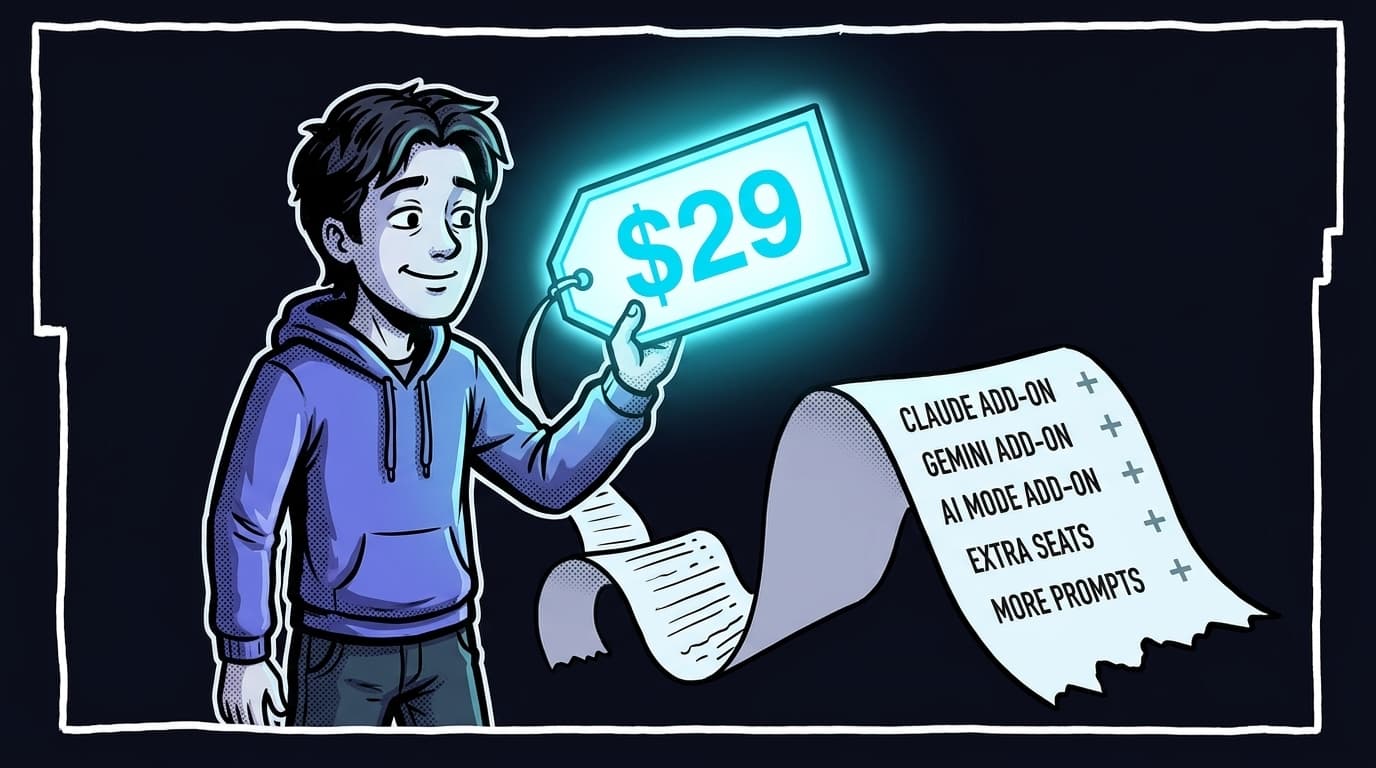
Engine coverage at your actual tier. Every vendor markets a long engine list; several reserve half of it for a tier you were not planning to buy. Profound's free trial covers three engines; Perplexity, Claude, and the rest of its nine-engine list sit behind custom Enterprise pricing. Peec AI's paid plans each cover three models of your choice, with up to thirteen on Enterprise. Otterly covers four engines at $29 and sells Claude, Gemini, and Google AI Mode as add-ons that can each cost more than the base plan. Read the engine list on the tier, never the homepage.
Prompt volume and how it is metered. Prompts are the unit. Some vendors count them directly, some meter credits where a credit equals one prompt on one model for one day, which means a single prompt tracked across three models for a month can consume ninety credits. Neither model is dishonest; they are just hard to compare until you convert to prompts-per-month at your engine count.
Cadence and samples per reading. Daily sounds better than weekly and often is not, because AI engines are probabilistic: the same prompt can produce different cited sources minutes apart. A daily single-shot check samples that noise every day. The more useful question is how many times each prompt runs per reading, which is the difference between a data point and a confidence band.
Published pricing and self-serve access. Demo-gated pricing is a legitimate enterprise motion, but it costs you a week and a sales call before you know whether the tool fits your budget. And agency workflow, if you run client work: multi-client projects, per-client reporting, and white-label output are the features that decide whether the tool survives contact with a retainer.
Key takeaway
Convert every tool to the same unit before comparing: cost per month for the engine set you need, at the prompt volume you need, at the sample count you trust. Most headline prices are quoting different things.
Answer Engine Optimization Tools Compared at a Glance
Entry tier only. All figures from each vendor's own pricing page: all on 2 October 2026.
| Tool | Entry price | Engines at entry | Cadence | Self-serve |
|---|---|---|---|---|
| Otterly.AI | $29/mo (Lite, 15 prompts) | 4 at entry. Claude, Gemini, AI Mode are paid add-ons | Daily | Yes |
| WhyIQ AI Radar | $29/mo (SMB, 30 prompts) | 5, all included at every paid tier | Weekly, 3 passes on Agency | Yes |
| Peec AI | EUR 85/mo (Starter, 50 prompts) | 3 of your choice. Up to 13 on Enterprise | Daily | Yes, except Enterprise |
| Profound | Free 7-day trial, then custom Enterprise via a demo | 3 on the trial. Up to 9 on Enterprise | Daily | Trial only |
| SE Ranking (SE Visible) | $89/mo add-on on an SE Ranking plan (200 prompts) | 4: ChatGPT, Perplexity, AI Overviews, AI Mode | Daily | Yes |
| Semrush | $165.17/mo billed annually (Starter, 50 prompts) | Google, ChatGPT, Perplexity, Gemini and more | Daily | Yes |
| AthenaHQ | Free tier, then $295/mo (Starter) | 5 free (no Claude), 11 at Starter | Not stated on pricing page | Yes |

0 of 7
tools on this list advertise a multi-run confidence measure on their entry tier. Single-shot checking is the category default. Vendor pricing pages, verified 2 October 2026
Which AEO Tool Is Right for Which Team?
Each of these is the right answer for somebody. Here is who.
Profound is the enterprise choice, and its pricing now says so outright. There are two plans: a free 7-day Trial that runs 50 prompts daily on ChatGPT, Gemini, and Google AI Overviews with unlimited seats but no exports, no history, and no API, and a custom-priced Enterprise plan reached through a demo. Enterprise covers up to nine answer engines and carries the thing genuinely worth paying for, Agent Analytics, which tracks AI-agent traffic hitting your own site through CDN integrations, plus the enterprise stack around it: SSO/SAML, SOC 2, CSV/JSON exports, an API, and Prompt Volumes. The trade-offs are real too: there is no published paid price, so you cannot budget without a sales call, and a seven-day trial with no history cannot show you a trend. If AI-agent traffic analytics is the problem you are solving, nothing else here competes.
Peec AI is the broad-coverage daily tracker, with a separate agency pricing page. Plans are priced in euros: Starter at EUR 85 a month for 50 prompts, Pro at EUR 205 for 150 prompts, and Advanced at EUR 425 for 350 prompts and multi-country tracking, all with unlimited users and daily tracking. Enterprise is custom, billed annually, and reaches up to thirteen models, which is more than we cover. The friction is model choice: every paid plan below Enterprise tracks three models you pick, so a five-engine view needs the custom tier. Prices are in euros, so convert before you compare.
Otterly.AI has the lowest published entry point at $29/mo, and daily tracking with unlimited team members at that price is genuinely good value. The asterisk is engine scope: Lite covers four engines and fifteen prompts, and Claude, Gemini, and Google AI Mode are add-ons priced from $9 up to $439 a month depending on tier and engine. A five-engine setup at Otterly does not cost $29. If you only care about ChatGPT, Perplexity, AI Overviews, and Copilot, it is the cheapest way to get there.
AthenaHQ is the only one with a genuinely useful free tier: 300 credits covering ChatGPT, Perplexity, Google AI Overviews, Gemini, and Copilot, with unlimited team members. Claude is not on it. Starter jumps to $295/mo and widens to eleven models, Claude included. That is a steep step, and the credit metering means each AI response consumes budget, but if you want to see five engines for free before spending anything, start here.
Semrush and SE Ranking are the incumbent answer, and for a lot of teams they are the correct one. Semrush now bundles AI visibility tracking into its main plans (Starter $165.17/mo billed annually, 50 prompts tracked daily), so if you already pay for Semrush you may already own this capability. SE Ranking sells its AI Search add-on at $89/mo ($71.20/mo billed annually) on top of a suite plan, with the SE Visible dashboard, 200 prompts tracked daily at entry, and four engines (ChatGPT, Perplexity, AI Overviews and AI Mode; Gemini is not in the add-on); a standalone SE Visible tier exists for teams that do not want the suite. Both are worth checking before you add a seventh subscription: the honest answer to "which AEO tool should I buy" is sometimes "none, you already have one."
WhyIQ AI Radar, ours, is $29/mo for 30 prompts across all five engines with no add-ons, and $149/mo for agencies (one client included, $49 per additional client) where every prompt runs three times per weekly check and the dashboard reports a band, cited in two of three passes, rather than a single sample. That multi-pass measurement is the thing we built the product around, and as of this verification date no other tool on this list advertises one. Where we are the wrong choice: we run weekly, not daily, so if you need same-day signal we are not it; we cover five engines and Peec's Enterprise plan reaches thirteen; and we have nothing resembling Profound's agent-traffic analytics. Full details are on our pricing page, and there is a sample client report if you want to see the output before the price.

Which One Should You Actually Buy?
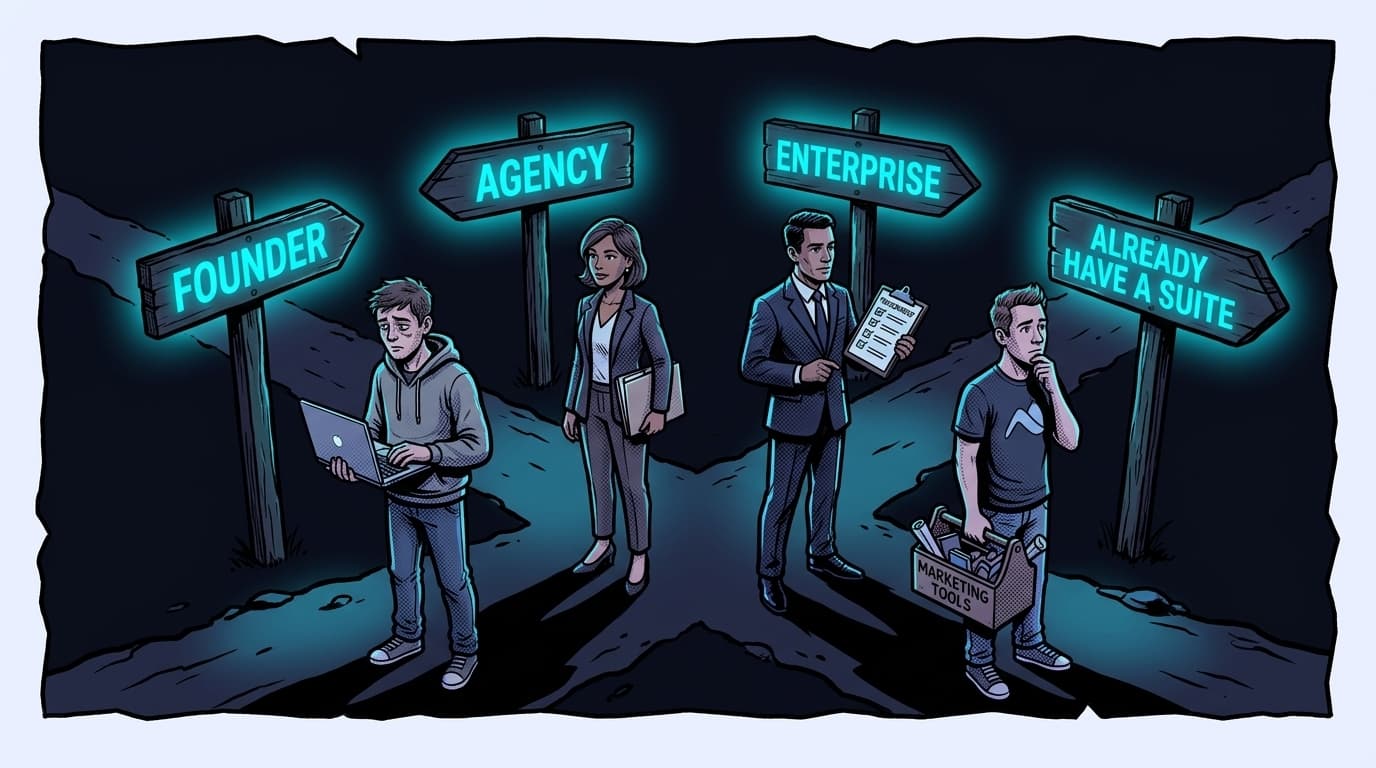
Four buyer shapes cover almost everyone asking this question.
You already pay for Semrush or SE Ranking. Check what your plan already includes before buying anything. Semrush bundles prompt tracking into its main tiers now, and SE Ranking's add-on starts at $89/mo on top of a subscription you already have. Adding a specialist tool on top only makes sense if you need engine breadth, prompt volume, or measurement rigor your suite does not offer.
You are a founder or small team testing the water. Start free with AthenaHQ's tier or a free check, then pick between Otterly at $29 for four engines and daily readings, or Radar at $29 for five engines and weekly readings. The real question is whether Claude, Gemini, and Google AI Mode matter in your category. If they do, compare the fully-loaded Otterly cost against a flat five-engine plan.
You are an agency running client work. Peec's agency tiers and our Agency tier are the two purpose-built options; Peec gives you daily cadence and wider model choice at Enterprise, we give you multi-pass confidence bands and white-label client reports at a lower per-client cost. Look at the deliverable each one produces, because the thing your client sees every month is the actual product.
You are enterprise with a procurement process. Profound, and it is not close. The agent-traffic analytics, the security posture, and the nine-engine Enterprise coverage are built for exactly that buyer. There is no published price, so budget for the sales cycle.
And who should not buy ours. Skip Radar if you need same-day signal, because we run weekly by design and no amount of wanting it faster changes that. Skip it if Copilot coverage matters to you, because Peec has an engine we do not. Skip it if the problem you are actually solving is AI-agent traffic on your own site, because that is Profound's product and we do not have one. And skip it if you already pay for Semrush or SE Ranking and only need a basic read, because paying twice for overlapping capability is a worse decision than any tool choice on this page.
The honest answer to "which AEO tool should I buy" is sometimes "none, you already have one." Check your existing suite first.
What Will No AEO Tool Do for You?
Every tool here measures. None of them earns you a citation.
This is the part the category undersells, and it applies to our product as much as anyone's. A tracker tells you that Perplexity cites a Reddit thread instead of your product page. It does not go and participate in that thread. The work that actually moves the number is off-page: third-party brand mentions correlate with AI citation at r=0.664, roughly three times the correlation of backlinks (Ahrefs, 2026), and in one 57-million-citation analysis brands earned only about 10 percent of citations from their own domains. The rest went to sources other people wrote.
So the tool is the instrument, not the intervention. Buy one to find out where you stand and to check whether your work moved anything, then spend most of your budget on the work itself: crawlable pages, answers in the opening third, the moves in the citability playbook, and real presence where your buyers are already reading. Expect a four to eight week lag between doing that work and seeing the number move, which is another reason a weekly reading with several samples beats a daily one with a single sample.
One last piece of due diligence. Prices in this category moved twice inside three months while we were writing this, so treat every figure here, including ours, as a snapshot dated 2 October 2026. If a comparison page does not tell you when it last checked, it is not telling you much.
Frequently asked questions
What is an answer engine optimization (AEO) tool?
An AEO tool tracks whether AI answer engines like ChatGPT, Perplexity, Gemini, and Google AI cite your brand when buyers ask questions in your category. The core job is running a set of prompts through those engines on a schedule and recording which sources each engine cited, so you can see where you are visible, where a competitor holds the slot, and whether your off-page work is moving the number.
What should I look for in an AEO tool?
Five things decide fit. Engine coverage at the price you will actually pay, including whether Claude, Gemini, and Google AI Mode are included or sold as add-ons. Prompt volume, since prompts are the unit most vendors meter. Cadence, weekly or daily, and whether each prompt runs once or several times. Whether pricing is published or demo-gated. And whether the tool reports a confidence measure rather than presenting a single probabilistic sample as fact.
How much do AEO tools cost?
Published entry prices range from about $29/mo to about $295/mo. As of October 2026, Otterly.AI starts at $29/mo for 4 engines and 15 prompts, WhyIQ AI Radar at $29/mo for 5 engines and 30 prompts, and Peec AI at EUR 85/mo for 50 prompts on 3 models, while Profound no longer publishes a paid price: it offers a free 7-day trial, then custom Enterprise pricing through a demo. As of August 2026, AthenaHQ was $295/mo with a free tier below it, SE Ranking's AI Search add-on started from $89/mo on top of a suite plan, and Semrush bundled AI visibility into its main plans from about $165/mo billed annually. Always check what the entry tier excludes: engine add-ons and model caps move the real cost substantially.
Do AEO tools track Claude and Gemini?
It varies, and this is the most common pricing surprise. As of October 2026, Profound's free trial covers ChatGPT, Gemini, and Google AI Overviews, with Claude and Perplexity reserved for its custom Enterprise plan. Otterly covers 4 engines at entry and sells Claude, Gemini, and Google AI Mode as paid add-ons. Peec AI lets you choose 3 models on each paid plan, with up to 13 on Enterprise. AthenaHQ's free tier covers 5 engines including Gemini and Copilot but not Claude, which arrives with its $295/mo Starter tier. WhyIQ AI Radar includes all 5 engines flat at every paid tier. Check the engine list against the tier you plan to buy, not the marketing page.
How often should an AEO tool check my visibility?
Weekly is defensible for most teams; daily is not automatically better. AI citations move on the timescale of crawls and third-party mentions, and because engines are probabilistic, a daily single-shot check mostly samples noise. A weekly check that runs each prompt several times and averages gives a more stable read than a daily check that runs each prompt once. The question to ask is not how often, but how many samples per reading.
Do I need an AEO tool if I already use Semrush or Ahrefs?
Possibly not. Semrush now bundles AI visibility tracking into its main plans, and SE Ranking sells both an add-on and a standalone tracker, so if you already pay for one of those suites you may already have coverage. Specialist tools tend to compete on engine breadth, prompt volume, agency multi-client workflows, and measurement rigor rather than on existing alone. Check what your suite already includes before adding a subscription.
Go deeper
For head-to-head detail see Radar vs Profound, vs Peec, vs Otterly, and vs AthenaHQ. For what the score itself means, see AI visibility score.